
Dish
Unknown Artist
second half 15th century
Medium
Tin-glazed earthenware
Dimensions
Overall: 17 1/4 in. (43.8 cm)
Classification
Ceramics
Culture
Spanish
Department
The Cloisters
Museum
Metropolitan Museum of Art, New York, NY
Credit
The Cloisters Collection, 1956
Accession Number
56.171.129
Rights
Public Domain
Tags
Art Historical Context
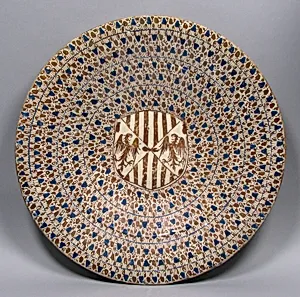
This elegant dish, crafted by an unknown Spanish artist in second half of the th century, exemplifies the of tin-glazed earthen, a technique that flourished in regions like Valencia and Manises. Measuring 17¼ inches (43.8 cm) in diameter, its broad, shallow form was ideal for serving during opulent Renaissance banquets. The tin glaze created a smooth, opaque white surface—perfect for vivid painted designs—while the earthenware body kept it lightweight yet durable, reflecting advanced ceramic skills blending Islamic and Christian influences in late medieval Spain. At its center likely gleams a coat of arms, a hallmark of heraldic dishes commissioned by noble families to display lineage and prestige. These pieces were status symbols, traded across Europe and prized for their lusterware-like sheen and intricate motifs. Produced amid Spain's cultural crossroads post-Reconquista, they highlight mudéjar artistry: motifs inspired by Moorish lustre but adapted with European heraldry. Now part of The Cloisters Collection at The Metropolitan Museum of Art (acquired 1956), this dish invites us to imagine the lavish tables of 15th-century Spanish aristocracy, where ceramics married function with fine art.