
Dish
Unknown Artist
1430–1460
Medium
Tin-glazed earthenware
Dimensions
Overall: 17 5/8 in. (44.8 cm)
Classification
Ceramics
Culture
Spanish
Department
The Cloisters
Museum
Metropolitan Museum of Art, New York, NY
Credit
The Cloisters Collection, 1956
Accession Number
56.171.130
Rights
Public Domain
Tags
Art Historical Context
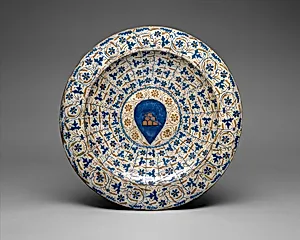
This stunning Spanish dish, crafted between 1430 and 1460, exemplifies the artistry of late medieval ceramics from the Iberian Peninsula. Measuring a generous 17⅝ inches (44.8 cm) in diameter, it hails from an era when Spain was a vibrant crossroads of Christian, Jewish, and Islamic influences, particularly in pottery production centers like Manises and Valencia. Now part of The Cloisters Collection at The Metropolitan Museum of Art since 1956, this tin-glazed earthenware piece reflects the technical sophistication of Hispano-Moresque ware, prized across Europe for its luminous surfaces. The medium—tin-glazed earthenware—is key to its allure. A tin oxide layer opacifies the clear glaze, creating a brilliant white ground ideal for vivid painted decorations, often featuring floral motifs as seen here. These flowers, a recurring theme in Spanish ceramics of the time, symbolize abundance and beauty, drawing from both Islamic ornamental traditions and emerging Renaissance naturalism. Firing the tin glaze at high temperatures ensured durability, making such dishes functional for serving yet luxurious display pieces. As a survivor from the 15th century, this dish offers a window into everyday opulence in medieval Spanish households, bridging utilitarian craft and high art. Its presence in The Cloisters invites visitors to appreciate how ceramics captured the era's cultural fusion and enduring aesthetic appeal.