
Dish
Unknown Artist
late 15th century
Medium
Tin-glazed earthenware
Dimensions
Overall: 18 7/8 in. (47.9 cm)
Classification
Ceramics
Culture
Spanish
Department
The Cloisters
Museum
Metropolitan Museum of Art, New York, NY
Credit
The Cloisters Collection, 1956
Accession Number
56.171.160
Rights
Public Domain
Tags
Art Historical Context
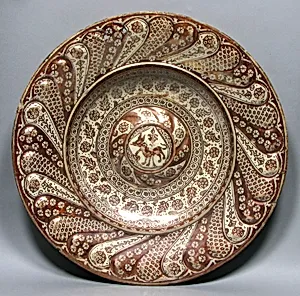
This magnificent *Dish* from late 15th-century Spain, crafted in tin-glazed earthenware exemplifies the vibrant ceramic traditions of the Iberian Peninsula. Measuring nearly 19 inches (47.9 cm) in, it was likely used for serving food in grand households, its broad surface ideal for bold decorations. Now housed in The Cloisters at the Metropolitan Museum of Art (The Cloisters Collection, 1956 this piece reflects the height of Spanish pottery production in regions like Manises and Valencia. Tin-glazing, a technique where a tin-oxide layer creates an opaque white ground perfect for painted designs, was a hallmark of Hispano-Moresque ceramics. Introduced by Islamic artisans during the medieval period, it allowed for vivid cobalt blue and polychrome motifs—here featuring animals, as suggested by its classification. These lively creatures not only served decorative purposes but also symbolized prosperity and nature's abundance in Renaissance-era Spain, just as the Reconquista concluded in 1492. As a cultural artifact, this dish bridges Islamic, Christian, and emerging Renaissance influences, showcasing Spain's role as a crossroads of artistic exchange. Its survival offers a glimpse into daily opulence and technical mastery of the time, inviting us to appreciate the enduring allure of medieval ceramics.