
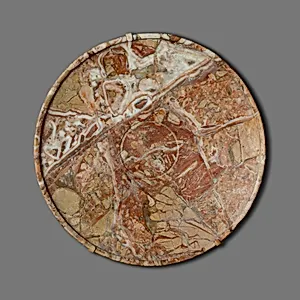
Dish
Unknown Artist
ca. 2750–2649 B.C.
Medium
breccia
Dimensions
H. 5.9 cm (2 5/16 in.); Diam. 41 cm (16 1/8 in.)
Classification
Dish
Period
Early Dynastic Period–Old Kingdom
Department
Egyptian Art
Museum
Metropolitan Museum of Art, New York, NY
Credit
Rogers Fund, 1912
Accession Number
12.181.66
Rights
Public Domain
Art Historical Context
This elegant dish, crafted around 2750–2649 B.C. during the second half of Egypt's Dynasty 2, the Early Dynastic Period and the of the Old Kingdom. to a formative era when pharaohs like Khasekhemwy solidified unified rule and monumental architecture began to emerge, such vessels were symbols of elite status and royal patronage. Produced anonymously by skilled artisans, it reflects the era's emphasis on durable, luxurious goods for elite households or temple offerings. Carved from breccia—a striking, brecciated stone with red and white fragments prized for its rarity and visual appeal—the dish measures a generous 41 cm in diameter but stands just 5.9 cm high, ideal for serving food or ritual substances. Ancient Egyptian stoneworkers laboriously hollowed hardstones like breccia using pounding stones, abrasives, and copper tools, showcasing technical prowess before widespread metal use. These vessels highlight early mastery of lapidary arts, enduring as prestige items amid a culture revering permanence. Acquired through the Rogers Fund in 1912, this piece at the Metropolitan Museum of Art offers a window into predynastic luxury, reminding us how everyday objects embodied eternal aspirations in ancient Egypt.