
DIsh
Unknown Artist
ca. 1390–1352 B.C.
Medium
Limestone
Dimensions
H. 4 cm (1 9/16 in), Diam. 14 cm (5 1/2 in)
Classification
Dish
Period
New Kingdom
Department
Egyptian Art
Museum
Metropolitan Museum of Art, New York, NY
Credit
Rogers Fund, 1911
Accession Number
11.215.714
Rights
Public Domain
Art Historical Context
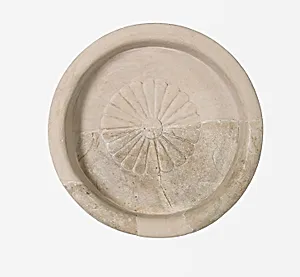
This delicate limestone dish, dating to around 1390–1352 B.C., hails from Egypt's New Kingdom, specifically Dynasty 18—a golden age of imperial power and artistic refinement under pharaohs like Thutmose III and Amenep III. Measuring just 4 cm high and 14 in diameter, its petite scale suggests it was crafted for intimate, everyday use, perhaps as a vessel for cosmetics, oils, or small offerings in a wealthy household or temple setting. Such objects reflect the era's prosperity, when Egypt's vast resources fueled exquisite craftsmanship that blended utility with subtle elegance. Carved from fine limestone, a durable and abundant local stone prized for its workability, the dish exemplifies New Kingdom sculptors' mastery of precision carving. Artisans likely shaped it on a lathe-like tool for smooth, symmetrical curves, achieving a polished surface that would have gleamed under the Nile's sunlight. These dishes were not mere containers but cultural touchstones, embodying rituals of beauty and devotion central to ancient Egyptian life—where personal adornment connected the mortal world to the divine. Acquired through the Rogers Fund in 1911, this unassuming treasure now graces the Metropolitan Museum of Art's Egyptian collection, offering visitors a tangible link to a civilization's daily splendor over 3,300 years ago.