
Dish
Unknown Artist
ca. 1640
Medium
Porcelain with underglaze blue (Hizen ware)
Dimensions
H. 1 in. (2.5 cm); Diam. 3 1/8 in. (7.9 cm)
Classification
Ceramics
Culture & Period
Japan · Edo period (1615–1868)
Department
Asian Art
Museum
Metropolitan Museum of Art, New York, NY
Credit
The Harry G. C. Packard Collection of Asian Art, Gift of Harry G. C. Packard, and Purchase, Fletcher, Rogers, Harris Brisbane Dick, and Louis V. Bell Funds, Joseph Pulitzer Bequest, and The Annenberg Fund Inc. Gift, 1975
Accession Number
1975.268.490
Rights
Public Domain
Tags
Art Historical Context
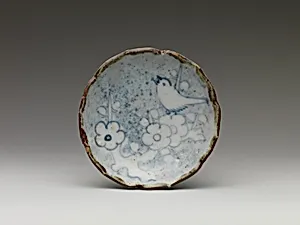
This delicate porcelain dish, crafted around 1640 in Japan's Hizen province during the Edo period (5–1868), the golden age of Japanese ceramics. just 1 inch high and 3⅛ inches in diameter, it's petite yet exquisite example of Hizen ware, for its fine white porcelain body and vibrant underglaze blue decoration The blue pigment, applied beneath a clear glaze before high-temperature firing, creates enduring, luminous designs—often featuring birds, as seen here—which evoke grace and natural harmony, common motifs symbolizing longevity and freedom in Japanese art. Hizen ware emerged from potteries in Arita, where potters had mastered porcelain production after discovering local kaolin clay in the early 17th century. Influenced by Chinese blue-and-white wares but infused with Japanese refinement, these pieces were prized domestically for tea ceremonies and exported via Dutch traders to Europe, sparking global fascination. This dish reflects the era's prosperity and technical innovation, as Japan transitioned from feudal isolation to cultural flourishing. Today, housed in the Metropolitan Museum of Art's Asian Art Department as part of the Harry G. C. Packard Collection, it invites us to appreciate the subtlety of Edo craftsmanship—where everyday objects became art treasures.