
Dish
1685 - 1690
Medium
dish
Dimensions
10.8; 1.6; 13.5
Rights
Public Domain
About this artwork
mark: ‘RIHS(ineen)’
Art Historical Context
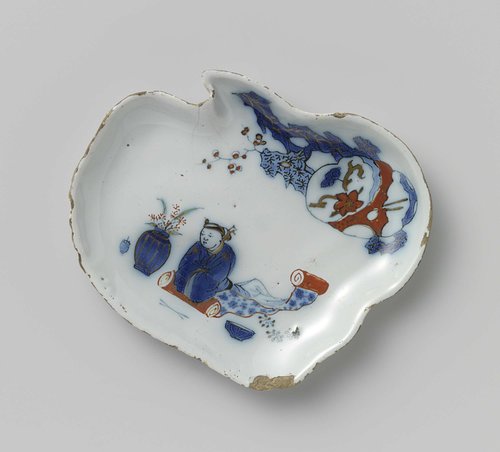
This delicate dish, crafted by the esteemed Delft pottery workshop Het Moriaanshooft between 1685 and 1690, exemplifies the height of Dutch tin-glazed earthenware during the Golden Age. Measuring just 10.8 cm in diameter, 13.5 cm wide, and 1.6 cm high, it was likely designed for serving sweets, fruits, or as a decorative trinket on affluent tabletops. Het Moriaanshooft, meaning "The Moor's Head," was one of Delft's premier factories, renowned for producing affordable yet sophisticated ceramics that rivaled imported Chinese porcelain. The piece bears the distinctive mark ‘RIHS(ineen)’, a monogram typical of Delftware potters, signaling authenticity and the skill of its maker. During this era, Delft artisans mastered maiolica techniques—firing earthenware bodies coated in tin glaze, then hand-painting intricate designs in cobalt blue before a final clear glaze. These dishes bridged utility and art, adorning bourgeois homes and symbolizing Holland's thriving trade and innovation. Today, such objects highlight the cultural exchange of the 17th century, blending Eastern aesthetics with European craftsmanship, and remind us of Delft's pivotal role in democratizing luxury. A charming survivor of everyday elegance!