
Dish (coppa)
Unknown Artist
ca. 1530–40
Medium
Maiolica (tin-glazed earthenware)
Dimensions
Diameter: 10 9/16 in. (26.8 cm)
Classification
Ceramics-Pottery
Culture
Italian, Urbino and Gubbio
Department
Robert Lehman Collection
Museum
Metropolitan Museum of Art, New York, NY
Credit
Robert Lehman Collection, 1975
Accession Number
1975.1.1128
Rights
Public Domain
Tags
Art Historical Context
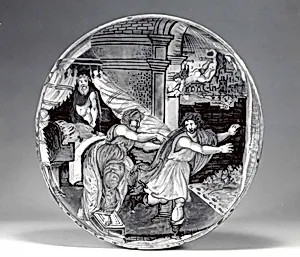
This elegant maiolica dish, known as a *coppa*, hails from the vibrant ceramic workshops of Urbino and Gubbio Renaissance Italy, around 1530–40. Measuring nearly 11 inches in diameter, it tin-glazed earthenware—a where a tin-opaque glaze created a smooth, brilliant white surface ideal for vivid painted decoration. Maiolica like this was prized as luxury tableware for affluent households, blending functionality with artistry during Italy's High Renaissance. The dish likely features lively scenes of men, women, and the mischievous Cupid, evoking themes of love and courtship popular in the era's decorative arts. Such imagery drew from classical mythology and contemporary life, reflecting the humanistic spirit of the time when Urbino's potters mastered the *istoriato* style—narrative paintings on ceramics rivaling canvas works. Gubbio artisans then added shimmering luster glazes, iridescent effects achieved through metallic oxides fired in special kilns, making pieces like this glow like jewels. Part of the Robert Lehman Collection at The Metropolitan Museum of Art since 1975, this anonymous masterpiece highlights the collaborative genius of Italian maiolica centers, preserving a snapshot of 16th-century opulence and storytelling.