
Dish for a ewer (bacile da versatore)
Unknown Artist
ca. 1520–30
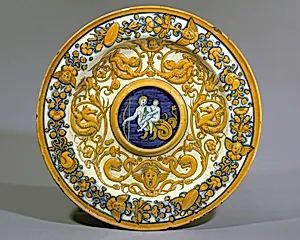
Medium
Maiolica (tin-glazed earthenware)
Dimensions
Diameter: 15 9/16 in. (39.6 cm)
Classification
Ceramics-Pottery
Culture
Italian, Deruta
Department
Robert Lehman Collection
Museum
Metropolitan Museum of Art, New York, NY
Credit
Robert Lehman Collection, 1975
Accession Number
1975.1.1054
Rights
Public Domain
Art Historical Context
This exquisite *Dish for a ewer (bacile da versatore)* crafted around 1520–30 in Deruta, Italy, hails from the height of the Renaissance maiolica tradition. Produced in Deruta—a renowned center for ceramics in Umbria—this large basin (nearly 16 inches in diameter) was to pair with a matching ewer for handwashing rituals in affluent households. Such sets symbolized hospitality and refinement, blending everyday utility with artistic splendor during Italy's vibrant early 16th century. olica, or tin-glazed earthenware, was a masterful technique that allowed potters to achieve brilliant, jewel-like colors on an opaque white surface. Artisans in Deruta excelled at this method, firing earthenware twice—first to harden the body, then glazing it with tin oxide for a smooth canvas that prevented colors from soaking in. The result? Vivid motifs often inspired by classical myths, nature, or heraldry, making pieces like this both functional and collectible treasures. Now part of the Robert Lehman Collection at The Metropolitan Museum of Art since 1975, this anonymous masterpiece showcases Deruta's cultural legacy as a hub of innovation in European ceramics, bridging Islamic glazing influences with Italian Renaissance flair. Visitors, imagine the gleam of candlelight on its glossy surface during a noble feast!