
Dish (piatto)
Medium
Maiolica (tin-glazed earthenware)
Dimensions
Diam. 10 3/16 in. (25.9 cm)
Classification
Ceramics-Pottery
Department
Robert Lehman Collection
Museum
Metropolitan Museum of Art, New York, NY
Credit
Robert Lehman Collection, 1975
Accession Number
1975.1.1130
Rights
Public Domain
Tags
Art Historical Context
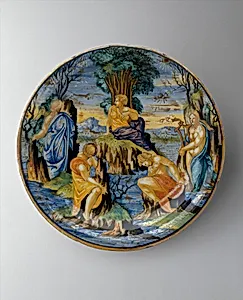
This exquisite *Dish (piatto)*, created by Francesco Xanto Av da Rovigo in Gubbio in 1532, exemplifies the Renaissance mastery of maiolica—tin-glazed earthenware allowed for brilliant, jewel-like colors and intricate designs. Measuring just over 10 inches in diameter this shallow plate from the Robert Lehman Collection at The Metropolitan Museum of Art features depictions of women and female nudes, a nod to the era's fascination with classical mythology and the human form. Avelli, a prolific painter active in central Italy's maiolica workshops, was renowned for his *istoriato* style—narrative scenes painted with extraordinary detail before glazing and firing. The tin glaze not only sealed the earthenware but created a smooth, luminous surface ideal for vibrant blues, yellows, and golds, making these dishes coveted luxury items across Europe. Gubbio's workshops, like Avelli's, specialized in such techniques, often signing and dating pieces to assert authorship in a competitive trade. As a snapshot of 16th-century Italian ceramics, this dish highlights the cultural blend of artistry and domestic elegance, where everyday objects became canvases for Renaissance humanism. Visitors will appreciate its tactile beauty and the lively figures that evoke antiquity's grace.