
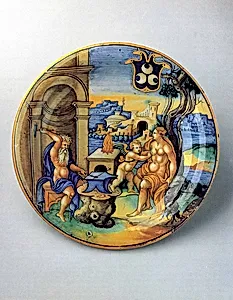
Dish (piatto): Vulcan forging an arrow for Cupid
ca. 1530
Medium
Maiolica (tin-glazed earthenware)
Dimensions
Diameter: 10 1/2 in. (26.6cm)
Classification
Ceramics-Pottery
Department
Robert Lehman Collection
Museum
Metropolitan Museum of Art, New York, NY
Credit
Robert Lehman Collection, 1975
Accession Number
1975.1.1132
Rights
Public Domain
Tags
Art Historical Context
This vibrant maiolica dish, titledVulcan Forging an Arrow for Cup*, dates to around 1530 and was crafted by the enigmatic "Milan Marsyas", an anonymous artist or workshop active in northern Italy. Measuring 10½ inches in diameter, this tin-glazed earthenware *piatto* (Italian for dish) captures a whimsical mythological scene from classical antiquity: the blacksmith god Vulcan at his forge, meticulously shaping a love-tipped arrow for the mischievous Cupid, with Venus likely presiding nearby. Such depictions reflect the Renaissance fascination with Greco-Roman myths, blending divine labor and romance in a lively narrative. Maiolica's signature technique—earthenware coated in opaque white tin glaze, then painted with vibrant metallic oxides and fired—allowed for jewel-like colors and intricate details that mimicked luxury metalwork or painting. Popular in Italian households and as diplomatic gifts, these display dishes adorned sideboards rather than tables, showcasing the owner's sophistication. Produced in Milanese workshops, this piece exemplifies the era's fusion of artisanal skill and humanist themes. Now in the Robert Lehman Collection at The Metropolitan Museum of Art, it invites us to ponder love's fiery origins—after all, who better to arm Cupid than the god of the forge? A testament to 16th-century ceramic innovation and storytelling.