
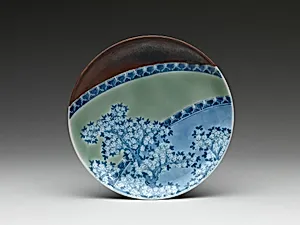
青磁染付銹地桜花幔幕文皿|Dish with Cherry Blossoms and Textile Curtains
Unknown Artist
ca. 1670–90
Medium
Porcelain with celadon glaze, partial brown glaze, and underglaze blue decoration (Hizen ware, Nabeshima type)
Dimensions
H. 1 5/8 in. (4.1 cm); Diam. 7 3/4 in. (19.7 cm)
Classification
Ceramics
Culture & Period
Japan · Edo period (1615–1868)
Department
Asian Art
Museum
Metropolitan Museum of Art, New York, NY
Credit
The Harry G. C. Packard Collection of Asian Art, Gift of Harry G. C. Packard, and Purchase, Fletcher, Rogers, Harris Brisbane Dick, and Louis V. Bell Funds, Joseph Pulitzer Bequest, and The Annenberg Fund Inc. Gift, 1975
Accession Number
1975.268.555
Rights
Public Domain
Tags
Art Historical Context
This exquisite porcelain dish, titled *Dish with Cherry Blossoms Textile Curtains*, hails from Japan's Hizen kilns in the Nabeshima style, crafted around 1670–90 during the Edo period (5–1868). just 1⅝ inches high and 7¾ inches in diameter, it showcases a masterful blend of celadon glaze—evoking a serene jade-green hue—over a partial russet-brown ground, accented by intricate underglaze blue designs. Delicate cherry blossoms cascade across the surface, framed by elegant textile curtain motifs, creating a harmonious interplay of nature and refined artistry. Nabeshima ware, produced under the patronage of the Nabeshima clan in present-day Saga Prefecture, represented the pinnacle of Japanese porcelain craftsmanship. Reserved primarily for samurai elites, shoguns, and imperial gifts, these pieces employed secretive techniques honed in Hizen kilns, rivaling Chinese imports in quality. The combination of celadon (seiji), iron-rich rust glaze, and cobalt-blue underglaze (sometsuke) highlights innovative glazing methods that ensured durability and vibrancy, even after centuries. In Japanese culture, cherry blossoms symbolize the fleeting beauty of life, a poignant Edo-era theme amid societal stability and artistic flourishing. The curtain patterns evoke luxurious hanging textiles (norimono), adding a sense of opulent domesticity. This dish, from The Metropolitan Museum of Art's Harry G. C. Packard Collection, invites visitors to appreciate how everyday objects became canvases for profound aesthetic and philosophical expression.