
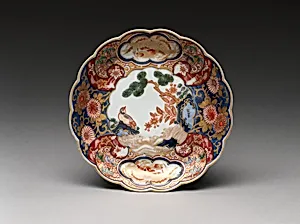
Dish with rocks, flowers, and birds
Unknown Artist
1710–30
Medium
Hard-paste porcelain with colored enamels under transparent glaze (Hizen ware; Imari type)
Dimensions
Diameter: 7 5/8 in. (19.4 cm)
Classification
Ceramics-Porcelain-Export
Culture
Japanese, for European market
Department
European Sculpture and Decorative Arts
Museum
Metropolitan Museum of Art, New York, NY
Credit
The Hans Syz Collection, Gift of Stephan B. Syz and John D. Syz, 1995
Accession Number
1995.268.66
Rights
Public Domain
Tags
Art Historical Context
This charming dish, titled *Dish with rocks, flowers, and birds exemplifies the artistry of early 18th-century Japanese export porcelain from the Hizen kilns in Imari, produced around 1710–. Crafted from hard-paste porcelain—a durable, translucent material made from kaolin clay—the 7⅝-inch diameter plate features vibrant motifs of rugged rocks, blooming flowers, graceful birds, painted with colored enamels sealed under transparent glaze. These bold designs, typical of Imari ware, were created for the European market, where such pieces became coveted status symbols among collectors. Imari porcelain surged in popularity during the late 17th and early 18th centuries, traded primarily through the Dutch East India Company. Japanese potters masterfully adapted traditional motifs—rocks symbolizing stability, flowers evoking seasonal beauty, and birds representing freedom—to appeal to Western tastes, blending Eastern aesthetics with exotic allure. The underglaze enamel technique ensured colorfastness through high firing, making these wares prized for both beauty and practicality in European dining and display. Today, housed in the Metropolitan Museum of Art's European Sculpture and Decorative Arts department as part of The Hans Syz Collection, this dish offers a window into global trade networks and cross-cultural exchange, reminding us how everyday objects carried artistic prestige across continents.