
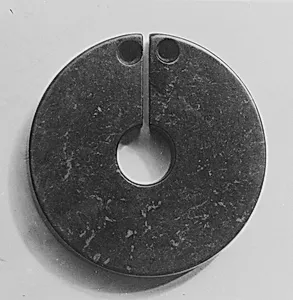
Disk
Unknown Artist
Medium
Jade
Dimensions
Diam. 2 3/8 in. (6 cm)
Classification
Jade
Culture & Period
China · Han dynasty (206 B.C.–A.D. 220)
Department
Asian Art
Museum
Metropolitan Museum of Art, New York, NY
Credit
Rogers Fund, 1922
Accession Number
22.141.33
Rights
Public Domain
Art Historical Context
This exquisite jade disk, known as a *bi*, hails from China's Han dynasty (206 B.C.–A.D. 220), a golden of imperial expansion, cultural flourishing, and sophisticated artistry. Carved from lustrous nephrite jade—prized for its toughness, translucency, and symbolic purity—this small ritual object measures just 2 3/8 inches (6 cm) in diameter Its perfectly round form with a central circular perforation evokes the ancient Chinese cosmos: the outer circle representing heaven, the hole symbolizing the polestar or cosmic axis. In Han society, jade *bi* disks were grave goods buried with elites, believed to ensure immortality and harmony with the universe. This tradition traces back to Neolithic times but reached new refinement during the Han, when artisans mastered piercing and polishing techniques to achieve a smooth, mirror-like surface. The stone's cool, eternal quality mirrored jade's role as a "stone of heaven," embodying Confucian virtues of moral integrity. Acquired through the Rogers Fund in 1922, this disk now graces the Metropolitan Museum of Art's Asian Art collection, offering visitors a tangible link to ancient rituals. Though the artist remains unknown, its understated elegance highlights jade's enduring prestige in Chinese culture.