
Disk Brooch
Unknown Artist
ca. 500–600
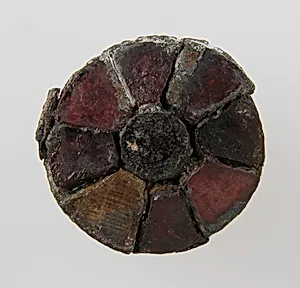
Medium
Silver, glass paste, remnant of iron pin, metal foil
Dimensions
Overall: 5/8 x 5/16 in. (1.6 x 0.8 cm)
Classification
Metalwork-Silver
Culture
Frankish
Department
Medieval Art
Museum
Metropolitan Museum of Art, New York, NY
Credit
Gift of J. Pierpont Morgan, 1917
Accession Number
17.192.40
Rights
Public Domain
Art Historical Context
This delicate Disk Brooch, crafted by an unknown Frankish artisan around 500–600 CE, offers a glimpse into the vibrant of early medieval Europe during the Merovingian period. Hailing from the Frankish culture that dominated much of Gaul after the fall of Rome, brooches were practical fasteners for cloaks and garments but also served as symbols of status and wealth. petite size—barely more than half an inch across—highlights the remarkable skill of ancient metalworkers, who transformed humble materials into wearable treasures. Made of silver with glass paste inlays mimicking precious gems, remnants of an iron pin, and shimmering metal foil, the brooch exemplifies Migration Period techniques. The glass paste provided affordable color and sparkle, while foil added a gilded sheen, blending Roman luxury traditions with Germanic innovation. These adornments were often buried with their owners, underscoring their role in personal identity and afterlife beliefs. A generous gift to the Metropolitan Museum of Art from J. Pierpont Morgan in 1917, this brooch now resides in the Medieval Art department. It invites us to marvel at the artistry of everyday life in a transformative era, where small objects carried big stories of power, craft, and cultural fusion.