
Document Sealing
Unknown Artist
ca. 1390–1352 B.C.
Medium
Mud
Dimensions
H. 2.3 cm (7/8 in.); w. 1.5 cm (9/16 in.); th. 1.1 cm (7/16 in.)
Classification
Sealing, Seth
Period
New Kingdom
Department
Egyptian Art
Museum
Metropolitan Museum of Art, New York, NY
Credit
Rogers Fund, 1911, 1912
Accession Number
12.180.617
Rights
Public Domain
Art Historical Context
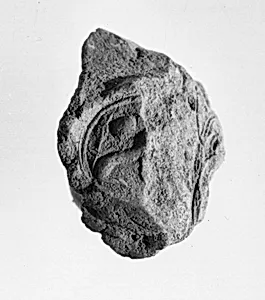
Step into the bustling world of ancient Egypt's New Kingdom with this tiny yet mighty artifact: a "Document Sealing" from 18 (ca. 1390–1352 B.C.).ed from mud—a simple, abundant material—this small object measures just 2.3 cm high, 1.5 cm wide, and 1.1 cm. Likely a clay bulla or impression, it was pressed onto papyrus documents to secure them, ensuring authenticity and preventing tampering in an era of vast administrative records, royal decrees, and trade transactions. During Dynasty 18, Egypt reached the zenith of its power under pharaohs like Amenhotep III and Akhenaten. These sealings were everyday tools of bureaucracy, reflecting a sophisticated society where literacy and record-keeping underpinned empire-building. The mud medium, often sun-dried or low-fired for durability, highlights practical ingenuity—inexpensive yet effective for sealing rolled scrolls. Though the artist remains unknown, the object's precision speaks to skilled craftsmanship in a culture that revered order (ma'at). Acquired through the Rogers Fund in 1911–1912, this piece from the Metropolitan Museum of Art offers a tangible glimpse into ancient Egypt's hidden machinery of governance. Imagine a scribe pressing it shut: a small act with big implications for history's preservation.