
Document Sealing
Unknown Artist
ca. 1390–1352 B.C.
Medium
Mud
Dimensions
H. 1.6 cm (5/8 in.0; w. 1.8 cm (11/16 in.); th. 0.8 cm (5/16 in.)
Classification
Sealing, cobra, scarab, uraeus
Period
New Kingdom
Department
Egyptian Art
Museum
Metropolitan Museum of Art, New York, NY
Credit
Rogers Fund, 1911, 1912
Accession Number
12.180.632
Rights
Public Domain
Art Historical Context
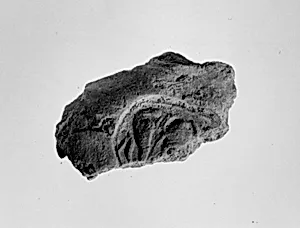
Step into the bustling world of ancient Egypt's New Kingdom with *Document Sealing*, a yet remarkable artifact from Dynasty 18 (ca. 1390–1352 B.C.). Crafted from mud—a simple, everyday material—this unassuming object measures just 1.6 cm high, 1.8 cm wide, and 0.8 cm thick. a clay impression used to secure papyrus documents or containers, it exemplifies the practical ingenuity of Egyptian administrators during a golden age of empire-building and monumental architecture. Produced in an era when pharaohs like those of Dynasty 18 expanded Egypt's influence across the Near East, this sealing served as a vital tool for authentication and security. Impressed with a stamp or cylinder seal (now worn smooth), it prevented tampering, safeguarding everything from royal decrees to trade records. Such artifacts reveal the sophisticated bureaucracy that underpinned Egypt's prosperity, where literacy and record-keeping were cornerstones of governance. Today, housed in the Metropolitan Museum of Art's Egyptian Art department (acquired via the Rogers Fund in 1911–1912), *Document Sealing* invites us to ponder the unsung heroes of antiquity—scribes and officials whose meticulous work preserved history. Though its artist remains unknown, this humble mud relic whispers tales of a civilization's enduring order.