
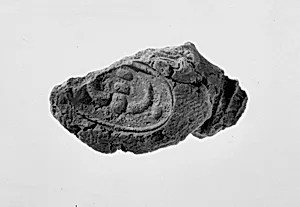
Document Sealing
Unknown Artist
ca. 1390–1352 B.C.
Medium
Mud
Dimensions
H. 1.8 cm (11/16 in.); w. 2.8 cm (1 1/8 in.); maximum th. 0.7 cm (1/4 in.)
Classification
Sealing, winged scarab, sun, nefer
Period
New Kingdom
Department
Egyptian Art
Museum
Metropolitan Museum of Art, New York, NY
Credit
Rogers Fund, 1911, 1912
Accession Number
12.180.633
Rights
Public Domain
Art Historical Context
Step into the bustling administrative world of ancient Egypt with *Document Sealing*, a yet telling artifact from the New Kingdom Dynasty 18 (ca. 1390–1352 B.C.). Crafted from mud—likely unbaked clay—this unassuming object measures just 1.8 cm high and 2.8 cm wide, small enough to fit in your palm. Acquired through the Rogers Fund in 1911 and 1912, it now resides in the Metropolitan Museum of Art's Egyptian Art collection. In the height of Egypt's imperial age, under pharaohs like Amenhotep III and Akhenaten, such sealings were everyday tools of bureaucracy. Pressed onto the edges of papyrus scrolls or tied around storage jars with string, they bore impressions from scarabs or cylinder seals, ensuring documents remained tamper-proof. This mud medium was practical: soft when wet for molding, it hardened upon drying, creating a simple but effective security seal for taxes, trade records, or royal decrees. Though by an unknown artist, this relic reveals the meticulous organization of New Kingdom society, where literacy and administration fueled an empire. It offers a glimpse into the unsung heroes—scribes and officials—who kept Egypt's vast machinery running, bridging the grandeur of tombs and temples with daily life. A humble survivor of millennia, it reminds us how the smallest objects illuminate history's grand narrative.