
Document Sealing
Unknown Artist
ca. 1390–1352 B.C.
Medium
Mud
Dimensions
H. 1.8 cm (11/16 in.); w. 2.7 cm (1 1/16 in.); maximum th. 1 cm (3/8 in.)
Classification
Sealing, Amun-Re, Upper Egypt, Lower Egypt
Period
New Kingdom
Department
Egyptian Art
Museum
Metropolitan Museum of Art, New York, NY
Credit
Rogers Fund, 1911, 1912
Accession Number
12.180.636
Rights
Public Domain
Art Historical Context
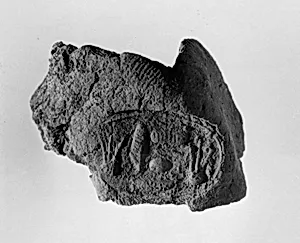
Step into the bustling administrative world of ancient Egypt with *Document Sealing*, a humble yet vital artifact from the New Kingdom's Dynasty 18 (ca. 1390–1352 B.C.). Crafted from mud—a simple, everyday material—this tiny object measures just 1.8 cm high, 2.7 cm wide, and 1 cm thick. Likely used to secure rolled papyri or containers, it bears the impression of a seal, ensuring documents remained tamper-proof in the pharaohs' vast bureaucracy. During Dynasty 18, Egypt's golden age of empire-building under rulers like Amenhotep III and Akhenaten, such sealings were essential for record-keeping, trade, and royal decrees. Mud, abundant and quick-setting, was pressed around ties or strings, then stamped with official emblems—often cartouches or symbols of authority. This piece, acquired through the Rogers Fund in 1911–1912, offers a tactile glimpse into daily governance, where even the smallest seal enforced order across the Nile Valley. Though created by an unknown artist, its survival at the Metropolitan Museum of Art highlights the ingenuity of Egyptian scribes. Far from grand statues, this unassuming mud lump reveals the meticulous systems that sustained one of history's greatest civilizations.