
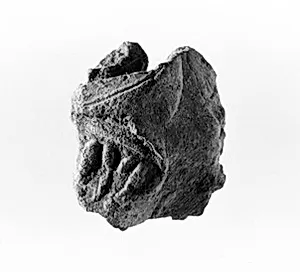
Document Sealing
Unknown Artist
ca. 1390–1352 B.C.
Medium
Mud
Dimensions
H. 2.8 cm (1 1/8 in.); w. 2.2 cm (7/8 in.); th. 0.9 cm (3/8 in.)
Classification
Sealing, djed, cobra
Period
New Kingdom
Department
Egyptian Art
Museum
Metropolitan Museum of Art, New York, NY
Credit
Rogers Fund, 1911, 1912
Accession Number
12.180.663
Rights
Public Domain
Art Historical Context
Welcome to the Egyptian Art galleries at the Metropolitan Museum of Art where we encounter a tiny yet telling artifact: *Document Sealing*, crafted by an unknown artist around 1390–1352 B.C. during Dynasty 18 of the New. This unassuming mud (likely sun-dried clay) measures just 2.8 cm high, 2.2 cm wide, and 0.9 cm thick— enough to fit in your palm. Acquired through the Rogers Fund in 1 and 1912, it exemplifies the everyday tools of ancient Egyptian administration. In the prosperous era of Dynasty 18, under pharaohs like Amenhotep III, Egypt's bureaucracy thrived, managing vast estates, trade, and temples. Seals like this one were pressed onto clay bullae or tags to secure papyrus documents, jars, or doors, preventing tampering and authenticating contents. The mud medium was practical and abundant, fired minimally or left to harden naturally, highlighting resourceful techniques suited to a Nile-dependent society. This modest sealing offers a window into the meticulous record-keeping that underpinned Egypt's golden age, from tax ledgers to royal decrees. Though simple, it reveals how ordinary objects ensured trust in a complex empire, reminding us that history's grandeur often hides in these diminutive details.