
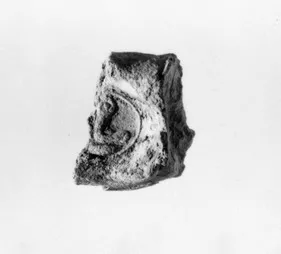
Document Sealing
Unknown Artist
ca. 1390–1352 B.C.
Medium
Mud
Dimensions
H. 1.9 cm (3/4 in.); w. 1.5 cm (9/16 in.); th. 1.1 cm (7/16 in.)
Classification
Sealing, cobra
Period
New Kingdom
Department
Egyptian Art
Museum
Metropolitan Museum of Art, New York, NY
Credit
Rogers Fund, 1911, 1912
Accession Number
12.180.696
Rights
Public Domain
Art Historical Context
Step into the bustling administrative world of ancient Egypt with *Document Sealing*, a tiny yet mighty artifact from the New Kingdom's Dynasty 18 (ca. 1390–1352 B.C.). Crafted from mud—a simple, abundant material—this unassuming object measures just 1.9 cm high, 1.5 cm wide, and 1.1 cm thick. Acquired through the Rogers Fund in 1911 and 1912, it now resides in the Metropolitan Museum of Art's Egyptian Art collection. In the golden age of pharaonic power, such mud sealings were essential for securing papyrus documents, storage jars, or doors, preventing tampering in Egypt's vast bureaucracy. Pressed with the impression of a seal—likely from a scarab or signet ring—it bore official marks of authority, reflecting the era's sophisticated record-keeping under rulers like Amenhotep III or Tutankhamun. These seals ensured trust in trade, tribute, and temple affairs, offering a glimpse into daily governance. Though created by an unknown artist, the sealing's humble mud medium highlights resourceful artistry: sun-dried or low-fired for durability, it preserved integrity in Egypt's hot climate. A small survivor from over 3,300 years ago, it whispers of an empire's meticulous order, inviting us to marvel at the unsung tools that built history.