
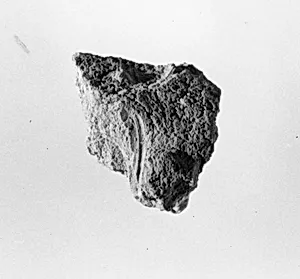
Document Sealing
Unknown Artist
ca. 1390–1352 B.C.
Medium
Mud
Dimensions
H. 1.5 cm (9/16 in.); w. 1.2 cm (1/2 in.); th. 0.6 cm (1/4 in.)
Classification
Sealing, no type
Period
New Kingdom
Department
Egyptian Art
Museum
Metropolitan Museum of Art, New York, NY
Credit
Rogers Fund, 1911, 1912
Accession Number
12.180.760
Rights
Public Domain
Art Historical Context
Step into the bustling administrative world of ancient Egypt with this tiny "Document Sealing," modest yet remarkable artifact from the New Kingdom Dynasty 18, dating to around 139–1352 B.C. Crafted from mud—likely Nile clay—this small lump measures just 1.5 cm high, 1.2 cm wide, and 0.6 cm thick. Pressed into its surface is the impression of a cylinder seal, a tool rolled over wet clay to create a unique mark, much like a modern wax seal but far more practical for everyday bureaucracy. In the height of Egypt's imperial power under pharaohs like Amenhotep III, such sealings secured papyrus scrolls, storage jars, and doorways, ensuring documents and goods remained tamper-proof. They reveal a sophisticated society reliant on precise record-keeping for taxes, trade, and temple inventories, highlighting the Egyptians' innovative approach to administration long before paper and locks existed. Though the artist remains unknown, this unassuming object speaks volumes about cultural priorities: security, hierarchy, and the divine order of kingship often symbolized in the seal's hieroglyphs. Acquired through the Rogers Fund in 1911 and 1912, it now resides in the Metropolitan Museum of Art's Egyptian Art department, a tangible link to a civilization's meticulous daily life.