
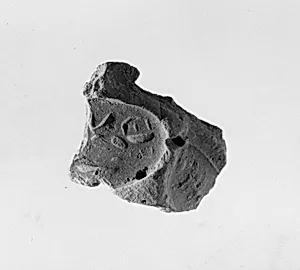
Document Sealing With Multiple Seal Impressions
Unknown Artist
ca. 1390–1352 B.C.
Medium
Mud
Dimensions
H. 1.6 cm (5/8 in.); w. 2 cm (13/16 in.); th. 0.8 cm (5/16 in.)
Classification
Sealing, bee, heb sed, djed
Period
New Kingdom
Department
Egyptian Art
Museum
Metropolitan Museum of Art, New York, NY
Credit
Rogers Fund, 1911, 1912
Accession Number
12.180.733
Rights
Public Domain
Art Historical Context
Step into the ancient world of Egypt's New Kingdom with this tiny yet remarkable artifact: a *Document Sealing With Multiple Seal Impressions*. Dating to around 1390–1352 B.C. during Dynasty 18—the golden age of pharaohs like Amenhotep III—this mud sealing measures just 1.6 cm high and 2 cm wide. Crafted from simple clay, it bears overlapping impressions from cylinder seals, a common administrative tool used to secure papyrus documents, doors, or storage jars against tampering. In the bustling bureaucracy of the New Kingdom, such sealings were essential for record-keeping, trade, and royal administration. Multiple impressions, often from officials' personal seals featuring hieroglyphs, motifs like scarabs, or deities, ensured authenticity and security. This example highlights the Egyptians' innovative use of everyday mud—pressed wet, stamped, and dried—to create tamper-evident closures, preserving fragile documents for posterity. Today, housed in the Metropolitan Museum of Art's Egyptian Art collection (acquired via the Rogers Fund in 1911–1912), it offers a glimpse into daily governance amid Egypt's imperial splendor. Though small, its layered seals whisper tales of trust and order in one of history's great civilizations.