
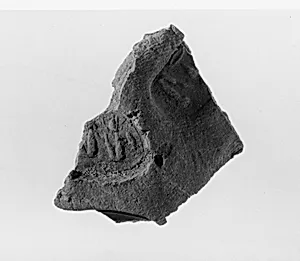
Document Sealing With Multiple Seal Impressions
Unknown Artist
ca. 1390–1352 B.C.
Medium
Mud
Dimensions
H. 1.8 cm (11/16 in.); w. 2.9 cm (1 1/8 in.); maximum th. 1 cm (3/8 in.)
Classification
Sealing, Amenhotep III, Nebmaatre, Onuris,
Period
New Kingdom
Department
Egyptian Art
Museum
Metropolitan Museum of Art, New York, NY
Credit
Rogers Fund, 1911, 1912
Accession Number
12.180.746
Rights
Public Domain
Art Historical Context
Step back in time to ancient Egypt's New Kingdom, 1390–1352 B.C., during the prosperous Dynasty 18. This tiny mud artifact, known as *Document Sealing With Multiple Impressions*, measures just 1.8 cm high and 2.9 cm wide—small enough to fit in your palm. Crafted from simple mud (sun-dried clay), it served as a practical seal for securing papyrus documents, a common administrative tool in Egypt's vast bureaucracy under pharaohs like Amenep III. The multiple impressions from stamp seals pressed into the soft clay ensured documents remained tamper-proof, much like modern wax seals but far more humble. These bullae were rolled onto rolled-up papyri, creating a secure lump that broke upon opening. This piece highlights the Egyptians' sophisticated record-keeping for taxes, trade, and royal decrees, reflecting a society where literacy and administration fueled empire-building. Housed in the Metropolitan Museum of Art's Egyptian Art department (Rogers Fund, 1911, 1912), it offers a glimpse into everyday governance. Though unassuming, its preservation underscores the ingenuity of ancient sealing techniques, bridging the gap between pharaonic grandeur and practical life.