
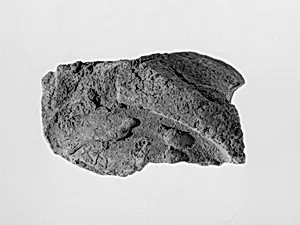
Document Sealing With the Throne Name of Amenhotep III
Unknown Artist
ca. 1390–1352 B.C.
Medium
Mud
Dimensions
H. 2.1 cm (13/16 in.); w. 2.8 cm (1 1/8 in.); maximum th. 1.3 cm (1/2 in.)
Classification
Sealing, Nebmaatre, Amenhotep III, Horus
Period
New Kingdom
Department
Egyptian Art
Museum
Metropolitan Museum of Art, New York, NY
Credit
Rogers Fund, 1911, 1912
Accession Number
12.180.591
Rights
Public Domain
Art Historical Context
This petite mud seal, measuring just over 2 cm high, offers a tangible glimpse into the administrative heart of ancient Egypt's New Kingdom. Crafted around 1390–1352 B.C. during Dynasty 18, it bears the throne name of Amenhotep, one of Egypt's most prosperous pharaohs, whose 38-year reign marked an era of unparalleled wealth, monumental architecture like the Luxor Temple, and diplomatic marriages that expanded the empire's influence. Made from simple mud—a practical, abundant medium—the seal was likely pressed onto papyrus documents, jars, or doors to authenticate official correspondence or secure goods. Its impressed hieroglyphs, including the royal cartouche, underscore the pharaoh's divine authority and the bureaucracy that kept the Nile Valley's vast economy humming. Such seals were everyday tools in scribal offices, blending functionality with symbolic power. Today, at the Metropolitan Museum of Art (acquired via the Rogers Fund in 1911 and 1912), this unassuming artifact illuminates how Amenhotep III's name permeated even mundane transactions, revealing the meticulous record-keeping that sustained a golden age. A reminder that history often hides in the smallest impressions.