
Don Chepito
1891-1899
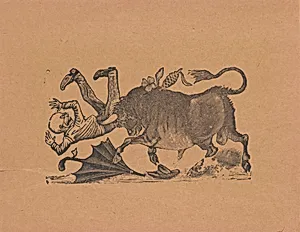
Medium
relief etching on pink paper
Dimensions
sheet: 25.4 × 22.86 cm (10 × 9 in.)
Classification
Department
CG-E
Museum
National Gallery of Art, Washington, D.C.
Credit
Gift of Christopher and Beverly With in memory of Karl and Gerda With
Accession Number
2013.135.6
Rights
Public Domain
Art Historical Context
José Guadalupe Posada's *Don Chepito*, created between 1891 and 1899, captures the satirical spirit of late 19th-century Mexico through a relief etching on vibrant pink paper. Posada (1852–1913), a pioneering Mexican printmaker, was renowned for his bold, black-line illustrations in popular broadsheets and newspapers. These works often lampooned social elites politicians, and everyday life, humor with sharp social commentary—a hallmark of his folk-inspired style that foreshadowed Mexico's revolutionary graphic arts. The relief etching technique, where ink adheres to raised surfaces on a metal plate, allowed Posada to produce affordable, high-contrast images for mass distribution. Printed on pink paper, *Don Chepito* gains a playful yet striking color pop, enhancing its accessibility to working-class audiences. Measuring just 10 × 9 inches, this intimate print exemplifies Posada's mastery of simplicity and wit, likely featuring a caricatured dandy whose exaggerated persona poked fun at pretentious figures in Mexican society. Today, housed in the National Gallery of Art's Department of Modern Prints (CG-E) as a gift from Christopher and Beverly With in memory of Karl and Gerda With, *Don Chepito* reflects Posada's enduring cultural legacy. His imagery, including iconic calaveras (skeletons), profoundly influenced Day of the Dead traditions and artists like Diego Rivera, making this piece a window into Mexico's vibrant printmaking heritage.
About the Artist
José Guadalupe Posada · 1852–1913
José Guadalupe Posada (1852-1913) was a Mexican printmaker and engraver who revolutionized popular art and created some of the most iconic images in Mexican culture. Working primarily with publisher Antonio Vanegas Arroyo, he produced over 20,000 images during his career—inexpensive broadsheets sold for a penny on colored paper that made his art accessible to even the poorest workers. He transform...