
Don Quixote and the Dead Mule
Honoré Daumier, after 1864
About this artwork
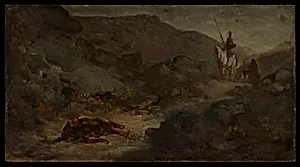
Honoré Daumier’s *Don Quixote and the Dead Mule*, painted after 1864, captures a poignant moment from Miguel de Cervantes’ iconic novel. This small oil on wood panel (9 3/4 x 18 1/8 in.) depicts the delusional knight-errant alongside his loyal steed, Rocinante, and a fallen mule, evoking themes of adventure, mishap, and human folly. Daumier, a master of French Realism, infused the scene with his signature empathy for the underdog, portraying Don Quixote not as a caricature but as a tragicomic figure. Created late in Daumier’s career—he was nearly blind by then—this intimate work exemplifies his shift to compact oil sketches on wood, allowing bold, expressive brushwork despite his failing eyesight. A prolific illustrator who produced over 100 lithographs inspired by Cervantes, Daumier revisited Don Quixote repeatedly, blending satire with profound humanism. The painting’s raw energy and dramatic composition highlight animals and men in a moment of quiet despair, reflecting 19th-century Romantic fascination with literary heroes. Housed in the Metropolitan Museum of Art’s European Paintings department (Catharine Lorillard Wolfe Collection, 1909), this piece invites visitors to ponder the blurred line between dreams and reality, much like Cervantes’ timeless tale. Daumier’s interpretation remains a testament to his enduring wit and compassion.