
Dood van Cato
1648
Medium
etching
Dimensions
420; 282
About this artwork
blad: hoogte 282 mm (binnen plaatrand afgesneden) x breedte 420 mm (binnen plaatrand afgesneden)
Art Historical Context
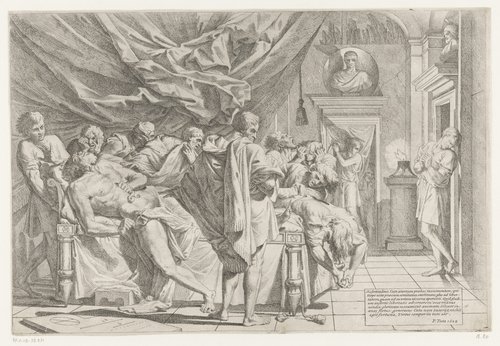
**Dood van Cato (Death of Cato)** Pietro Testa, 1648 Etching, 282 × 420 mm (sheet, trimmed within plate lines) Pietro Testa, a prominent Italian Baroque artist active in 17th-century Rome, captures the dramatic suicide of Cato the Younger in this powerful etching. Cato, the staunch Roman republican who stabbed himself rather than submit to Julius Caesar's tyranny after the Battle of Philippi in 46 BCE, embodies stoic virtue and resistance—a timeless theme revived during the Baroque era's fascination with classical antiquity. Testa's composition likely draws on ancient sources like Plutarc...
About the Artist
Pietro Testa · 1612–1650
Pietro Testa was born in Lucca in 1612 and, in accordance with the conventions of Italian artistic training, made his way to Rome while still young. There he studied under two of the leading painters of the early seventeenth century: Domenichino, from whom he absorbed a taste for classical restraint and narrative clarity, and Pietro da Cortona, whose more exuberant Baroque manner offered a contras...