
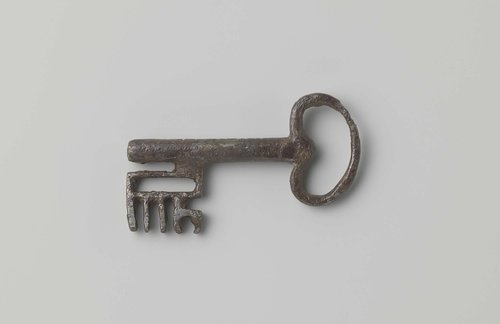
Dopsleutel van staal
Unknown Artist
ca. 1400 - ca. 1500
Medium
steel (alloy)
Dimensions
2.3; 5.6
Rights
Public Domain
About this artwork
lengte 5,6 cm x breedte 2,3 cm
Art Historical Context
### Dopsleutel van Staal Nestled in the late medieval world of the 15th century (ca. 1400–1500), this *Dopsleutel vanal*—a compact socket key or wrench—offers a glimpse into the everyday ingenuity of pre-industrial Europe. Measuring just 5.6 cm long and 2.3 cm wide, this unassuming tool was likely used by artisans, locksmiths, or builders to tighten or loosen socketed fasteners, reflecting the growing sophistication of mechanical devices during the Late Middle Ages in the Low Countries or surrounding regions. Crafted from a durable steel alloy, the key showcases early metallurgical expertise. Steel, forged through careful heating and hammering, provided the strength needed for practical tasks, marking a transition from softer iron tools. Its anonymous maker represents the skilled, unnamed craftsmen whose innovations quietly powered medieval society—from cathedral construction to armor repair—highlighting how functional objects embodied artistic precision in form and function. For museum visitors, this tiny artifact bridges art and utility, reminding us that beauty often lay in utility. Displayed alongside grand paintings, it underscores the cultural tapestry of innovation that fueled the Renaissance, inviting reflection on the hands that shaped history.