
Double Bass
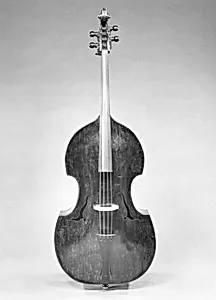
Medium
Wood
Dimensions
Total length: 196.6 cm Body length: 116.2 String length: 111.5 Upper bouts: 54.5 Middle bouts: 36.6 Lower bouts: 70 Upper ribs: 20.7 Middle ribs: 22.4 Lower ribs: 22
Classification
Chordophone-Lute-bowed-unfretted
Culture
Czech
Department
Musical Instruments
Museum
Metropolitan Museum of Art, New York, NY
Credit
Purchase, The Crosby Brown Collection of Musical Instruments, by exchange; Gifts of Mr. and Mrs. Garnett Day, Fred Miller, Mrs. G. C. Glynn and Mr. and Mrs. Jason Berger, in honor of Angna Enters, by exchange; Gifts in memory of June Reid; and Deborah Autorino Gift, 1983
Accession Number
1983.130
Rights
Public Domain
Art Historical Context
This double bass, crafted in 1734 by Johann Ulrich Eberle, stands as a remarkable example of 18th-century Czech instrument making. Created from selected wood, the instrument the meticulous craftsmanship of period, when luth balanced structural strength with resonance. Its classification as chordophone-luteowed-unfretted its role in the of bowed string instruments, designed to provide deep, sustaining tones in ensembles and orchestras of the Baroque and early Classical eras. The detailed dimensions—total length of 196.6 cm and a body length of 116.2 cm—reveal the thoughtful proportions that contribute to both playability and sound projection. Such precision underscores the artistic and technical skill required to shape the upper, middle, and lower bouts, ensuring the instrument’s stability and tonal quality. Acquired by the Metropolitan Museum of Art in 1983 through a series of thoughtful exchanges and gifts, this double bass offers visitors a tangible connection to European musical heritage. It invites us to appreciate how functional objects like instruments can embody both utility and beauty.