
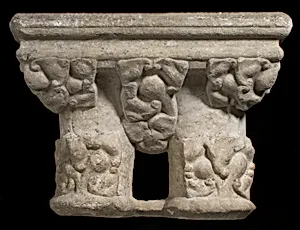
Double Capital
Unknown Artist
late 13th–early 14th century
Medium
White marble
Dimensions
Overall: 22 x 16 x 14 in. (55.9 x 40.6 x 35.6 cm)
Classification
Sculpture-Architectural
Culture
French
Department
The Cloisters
Museum
Metropolitan Museum of Art, New York, NY
Credit
The Cloisters Collection, 1925
Accession Number
25.120.739
Rights
Public Domain
Art Historical Context
Behold the *Double Capital*, a exquisite of French Gothic architectural sculpture from the late 13 to early 14th. Carved from luminous white marble, this piece measures 22 x 16 x 14 inches and consists of two intricately designed column capitals—likely intended to crown the supports of a grand cathedral or abbey. Now housed in The Cloisters at the Metropolitan Museum of Art (acquired in 1925), it evokes the soaring stonework of medieval France, where such elements adorned sacred spaces like Chartres or Reims. In the Gothic era, capitals served both structural and decorative purposes, transitioning smoothly from slender columns to arches while bursting with symbolic motifs—often stylized foliage, mythical beasts, or biblical scenes that drew the eye upward toward the divine. The unknown artisan's mastery of marble is evident in the fine undercutting and delicate detailing, techniques that allowed light to play across surfaces, enhancing the quality of Gothic interiors. This double form suggests it may have flanked an entrance or nave, underscoring the period's emphasis on harmony and repetition in design. As a survivor of centuries, this capital invites us to ponder the anonymous sculptors whose skill brought stone to life, blending engineering prowess with spiritual artistry. A true gem of The Cloisters Collection, it transports visitors back to an age of faith-fueled innovation.