
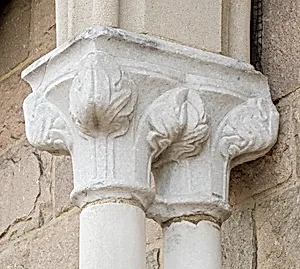
Double Capital
Unknown Artist
late 13th–early 14th century
Medium
Marble
Dimensions
Overall: 21 1/2 x 15 x 12 in. (54.6 x 38.1 x 30.5 cm)
Classification
Sculpture-Architectural
Culture
French
Department
The Cloisters
Museum
Metropolitan Museum of Art, New York, NY
Credit
The Cloisters Collection, 1925
Accession Number
25.120.754
Rights
Public Domain
Art Historical Context
Behold the *Double Capital*, a masterful marble sculpture from late 13th- to early 14th-century, now gracing The Cloisters at the Metropolitan Museum of Art. Carved from enduring white marble, this architectural element measures 21½ x 15 x 12 inches and represents the crowning tops of columns—likely paired for a Gothic structure. Its "double" form suggests it supported coupled columns, a common feature in medieval churches and cathedrals, where capitals transitioned smoothly from sturdy shafts to soaring arches. Crafted during the height of French Gothic architecture, this piece exemplifies the era's obsession with light, height, and intricate decoration. Stone carvers, often anonymous artisans in bustling workshops, adorned capitals with foliate motifs, figures, or biblical scenes to inspire awe and devotion among worshippers. Marble's translucency and workability allowed for delicate undercutting and fine details, techniques that brought stone to life amid the dim glow of stained-glass windows. As part of The Cloisters Collection since 1925, this artifact transports us to the workshops of medieval France, evoking the grandeur of sites like Chartres or Reims. Though its exact provenance remains a mystery, it stands as a testament to the skill of forgotten sculptors and the spiritual ambition of the Gothic age.