
Double Capital
Unknown Artist
late 15th century
Medium
Marble
Dimensions
Overall: 21 x 13 in. (53.3 x 33 cm)
Classification
Sculpture-Architectural|Sculpture-Marble
Culture
French
Department
The Cloisters
Museum
Metropolitan Museum of Art, New York, NY
Credit
The Cloisters Collection, 1962
Accession Number
62.268.1
Rights
Public Domain
Tags
Art Historical Context
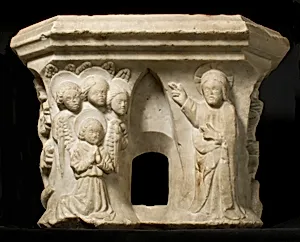
Nestled in The Cloisters' collection at the Metropolitan Museum of Art *Double Capital* is a late 15th-century French marble sculpture, measuring 21 x 13 inches. Crafted by an unknown artist, this architectural element—likely the crowning top of paired columns—exemplifies the intricate stonework of late Gothic France. During this era, as cathedrals and churches reached their ornate peak in the Flamboyant style capitals like this served both structural and decorative purposes, transforming utilitarian architecture into storytelling surfaces. The sculpture's surface teems with lively relief carvings: Christ at the center, surrounded by symbolic creatures including birds, deer, and lambs. Lambs evoke the Agnus Dei, Christ's sacrificial role, while deer often symbolize piety or the soul's longing for God in medieval Christian iconography. Birds might represent the Holy Spirit or divine messengers. Carved with masterful precision in durable marble, the low-relief technique allows delicate details to catch the light, drawing viewers into a miniature biblical menagerie that once adorned a sacred space. This artifact highlights the anonymous genius of medieval masons, whose craftsmanship blended faith, nature, and engineering. Displayed among The Cloisters' evocation of a medieval monastery, it invites us to ponder the devotion etched into every curve, bridging 15th-century piety with our modern gaze. (198 words)