
明中期 掐絲琺瑯花鳥紋葫蘆形壺|Double-gourd form ewer with birds and flowers
Unknown Artist
16th century
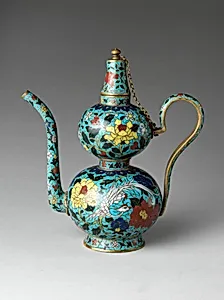
Medium
Cloisonné enamel
Dimensions
H. 10 1/8 in. (25.7 cm); W. at spout and handle 9 1/2 in. (24.1 cm) Diam. of foot: 3 3/8 in. (8.6 cm)
Classification
Cloisonné
Culture & Period
China · Ming dynasty (1368–1644)
Department
Asian Art
Museum
Metropolitan Museum of Art, New York, NY
Credit
Gift of Edward G. Kennedy, 1929
Accession Number
29.110.30
Rights
Public Domain
Tags
Art Historical Context
This exquisite double-gourd form ewer, crafted in cloisonné enamel during China's Ming dynasty (1368–1644) in the 16th, exemplifies the era's mastery of luxury metalwork. Standing about 10 inches tall with a graceful spout and handle spanning nearly 9½ inches, its bulbous, interconnected gourd shape evokes abundance and harmony—auspicious symbols in Chinese culture associated with longevity, wealth, and fertility. Adorned with vibrant birds and flowers, including majestic phoenixes, the vessel was likely used for pouring wine or water in elite rituals or scholarly gatherings. Cloisonné enamel, a technique perfected in Ming imperial workshops, involves soldering thin metal wires (cloisons) onto a copper body to form intricate cells, which are filled with colorful glass enamels, fired multiple times, and polished to a luminous sheen. This labor-intensive process yielded jewel-like results, blending Chinese aesthetics with influences from Persian and European enameling traditions introduced via the Silk Road. The phoenix motif, paired with blooming flowers, celebrates renewal, imperial virtue, and the beauty of nature, reflecting Confucian ideals of balance. Now housed in the Metropolitan Museum of Art's Asian Art Department as a 1929 gift from Edward G. Kennedy, this anonymous masterpiece highlights the Ming court's patronage of decorative arts, bridging functionality and artistry in everyday splendor. Visitors, imagine the soft glow of candlelight dancing across its enamels during a dynastic banquet!