
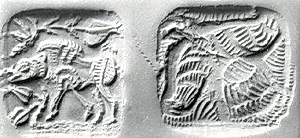
Double-sided stamp seal and modern impression: striding boar; vulture
Unknown Artist
ca. late 3rd–early 2nd millennium BCE
Medium
Stone, dark gray
Dimensions
1.81 x 1.69 x 0.52 in. (4.6 x 4.29 x 1.32 cm)
Classification
Stone-Stamp Seals
Culture & Period
Bactria-Margiana Archaeological Complex · Bronze Age
Department
Ancient Near Eastern Art
Museum
Metropolitan Museum of Art, New York, NY
Credit
Gift of Martin and Sarah Cherkasky, 1985
Accession Number
1985.192.28
Rights
Public Domain
Tags
Art Historical Context
This exquisite double-sided stamp seal, carved from dark gray stone, hails from the Bactria-Margiana Archaeological ComplexBMAC) in ancient Central Asia during the late3rd to early 2nd millennium. Measuring just under 2 inches across, one side features a dynamic striding boar, symbolizing strength and vitality, while the other depicts a vigilant vulture, evoking themes of the natural world and possibly spiritual guardianship. These miniature masterpieces were essential tools in Bronze Age societies, used to imprint clay documents, goods, or containers with personal or administrative seals, facilitating trade and bureaucracy across vast regions from modern-day Turkmenistan to Afghanistan. Crafted in intaglio—carved in relief for stamping—the seal showcases the BMAC's sophisticated lapidary techniques, blending intricate detailing with portability. Animal motifs like boars and birds were hallmarks of BMAC iconography, reflecting a worldview intertwined with wildlife, fertility, and cosmic order amid burgeoning urban centers like Gonur Tepe. A modern impression accompanies the artifact, revealing how the raised designs would appear in reverse on clay, bridging ancient craft with our contemporary gaze. Now at The Metropolitan Museum of Art, thanks to the gift of Martin and Sarah Cherkasky in 1985, this seal offers a tangible glimpse into a mysterious Bronze Age culture, reminding us how small objects encoded power and identity. (218 words)