
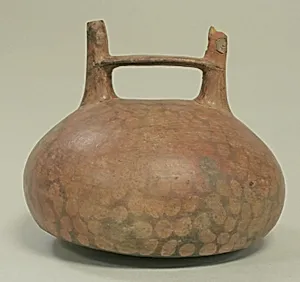
Double Spout and Bridge Bottle with Bird
Unknown Artist
5th–2nd century BCE
Medium
Ceramic, pigment
Dimensions
H. 5 1/2 in. (13.97 cm)
Classification
Ceramics-Containers
Culture
Paracas
Department
Arts of Africa, Oceania, and the Americas
Museum
Metropolitan Museum of Art, New York, NY
Credit
Gift of Mr. and Mrs. Nathan Cummings, 1964
Accession Number
64.228.150
Rights
Public Domain
Tags
Art Historical Context
This exquisite *Double Spout and Bridge with Bird*, crafted by an unknown Paracas artist between the 5th and 2nd centuries BCE, exemplifies the sophisticated ceramics of ancient Peru's Paracas culture on the southern coast. Standing just 5 1/2 inches tall, this small ceramic vessel features a distinctive double-spout design connected by a bridge handle hallmark of Paracas pottery that allowed for controlled pouring of liquids, possibly chicha (fermented corn beer) in rituals or daily life. Adorned with pigment after firing, its surface likely captures a lively bird motif, evoking the natural world central to Paracas iconography. Paracas artisans, flourishing from around 800–100 BCE, were master potters who hand-built vessels from fine clay, producing thin-walled ceramics remarkable for their durability and elegance. These bottles often served as grave goods in the culture's famous bundle burials, wrapped in stunning embroidered textiles, suggesting beliefs in an afterlife journey. The bird depicted here may symbolize spiritual messengers or deities, bridging the earthly and supernatural realms—a recurring theme in Paracas art that blends realism with mysticism. Housed in the Metropolitan Museum of Art's Arts of Africa, Oceania, and the Americas department, this gift from Mr. and Mrs. Nathan Cummings in 1964 offers a window into pre-Inca ingenuity, where form, function, and symbolism intertwined seamlessly.