
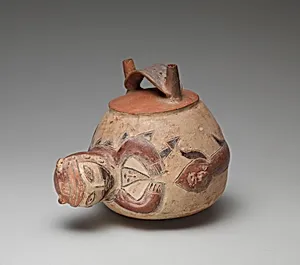
Double-spout bottle with monkey
200 BCE–100 CE
Medium
Ceramic, slip
Dimensions
H. 6 1/2 × W. 6 1/2 × D. 8 1/8 in. (16.5 × 16.5 × 20.6 cm)
Classification
Ceramics-Containers
Culture
Paracas
Department
Arts of Africa, Oceania, and the Americas
Museum
Metropolitan Museum of Art, New York, NY
Credit
Gift of Nathan Cummings, 1963
Accession Number
63.232.46
Rights
Public Domain
Tags
Art Historical Context
This double-spout bottle, created by Paracas artists between 200 BCE and 100 CE, exemplifies the sophisticated ceramic traditions of Peru’s south coast. Crafted from clay and decorated with slip—a liquid mixture of clay and mineral pigments—the vessel features the distinctive bridge-spout form long favored in the Andes. Its compact, rounded body and modeled monkey figure reflect both practical design and symbolic intent, as monkeys appear frequently in Paracas imagery, possibly evoking the natural world or notions of agility and fertility. The Paracas culture is renowned for its vibrant, technically accomplished pottery, often produced for ceremonial or funerary use. The slip-painted surfaces allowed artisans to achieve rich colors that survived burial, while the double-spout construction helped reduce spills when pouring liquids. Such vessels reveal how everyday objects carried deeper cultural meanings within Paracas society. Now part of the Metropolitan Museum’s collection through a 1963 gift, this modest yet expressive work invites visitors to appreciate the ingenuity of early Andean potters and the enduring appeal of animal imagery in their art.