
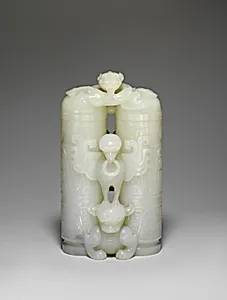
清中期 玉雕英雄雙聯瓶|Double vessel with mythical beasts (champion vase)
Unknown Artist
18th–19th century
Medium
Jade (nephrite)
Dimensions
H. 6 1/2 in. (16.4 cm); W. 3 1/2 in. (9.2 cm); D. 2 3/4 in. (7.5 cm)
Classification
Jade
Culture & Period
China · Qing dynasty (1644–1911)
Department
Asian Art
Museum
Metropolitan Museum of Art, New York, NY
Credit
Gift of Heber R. Bishop, 1902
Accession Number
02.18.370a, b
Rights
Public Domain
Tags
Art Historical Context
This exquisite double vessel, carved from nephrite jade during China's Qing dynasty (18th–19th century showcases the era's mastery of jade craftsmanship. Titled *清中期 玉雕雙聯瓶* or "Double vessel with mythical beastschampion vase)," it features intertwined mythical creatures—likely powerful guardians symbolizing strength and protection—forming a unified, functional yet ornamental pair of vases. Standing just 6½ inches tall, its compact form (16.4 cm high, 9.2 cm wide, 7.5 cm deep) highlights the sculptor's precision in transforming tough nephrite into fluid, life-like forms. Nephrite jade, prized in imperial China for its creamy translucency and durability, was a material fit for emperors, often sourced from Xinjiang's Hetian mines. Qing artisans employed intricate techniques like incising, drilling, and polishing to reveal the stone's natural mottling, creating a luminous glow that evoked purity and immortality. Such vessels weren't merely decorative; they embodied Confucian ideals of harmony and auspiciousness, with mythical beasts warding off evil. A gift to the Metropolitan Museum of Art from Heber R. Bishop in 1902, this piece reflects the Qing court's opulent patronage of jade art, bridging utility and symbolism in Asian decorative traditions. Visitors, admire how its beasts seem poised to leap— a testament to timeless Chinese ingenuity!