
Double Virginal
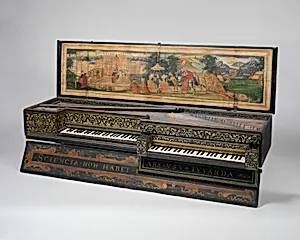
Medium
Pine, spruce, paint, gilding, ivory
Dimensions
inst. 188cm x 50cm x 27cm stand: 142cm x 61cm x 72cm
Classification
Chordophone-Zither-plucked-virginal
Culture
Flemish
Department
Musical Instruments
Museum
Metropolitan Museum of Art, New York, NY
Credit
The Crosby Brown Collection of Musical Instruments, 1889
Accession Number
89.4.1196
Rights
Public Domain
Tags
Art Historical Context
Step into the enchanting world of Renaissance music with the *Double Virginal* crafted by Flemish maker Lodewijck Grouwels in 1600. This exquisite chordophone—a compact, plucked keyboard instrument akin to a small harpsord—was a prized domestic staple in affluent European homes. Its dual keyboards allowed for versatile polyphonic playing, producing a bright, plucked tone ideal for lute-like songs and dances of the era. Standing elegantly on its separate base (totaling imposing dimensions), it reflects the golden age of Antwerp's instrument-making tradition, where Flemish artisans blended superb woodworking with decorative flair. Constructed from resonant pine and spruce, the virginal is adorned with paint, gilding, and ivory keys, showcasing meticulous craftsmanship. Vivid scenes of men, women, crowds, and horses—likely painted on its lid and case—evoke lively processions or hunts, infusing the instrument with narrative artistry. These decorations highlight the Flemish fusion of function and fine art, where everyday objects became canvases for storytelling during the late Renaissance. Housed in the Metropolitan Museum of Art's Crosby Brown Collection of Musical Instruments (acquired 1889), this survivor offers a tangible link to 17th-century leisure and culture, reminding us how music and visual splendor intertwined in daily life.