
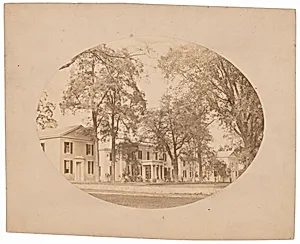
Doughoregan Manor, Maryland
c. 1860
Medium
albumen print
Dimensions
image/sheet: 9.8 × 13 cm (3 7/8 × 5 1/8 in.) mount: 13.3 × 16.6 cm (5 1/4 × 6 9/16 in.)
Classification
Photograph
Department
CPH
Museum
National Gallery of Art, Washington, D.C.
Credit
Ross J. Kelbaugh Collection, Purchased with support from the Ford Foundation
Accession Number
2023.39.172
Rights
Public Domain
Art Historical Context
Step into the elegant world of 19th-century American estates with Henry Pollock's *Doughoregan Manor, Maryland (c. 1860), a delicate albumen print capturing the grandeur of this historic Maryland residence. Nestled in Howard County, Doughoregan was the longtime home of the prominent Carroll family, including Charles Carroll of Carrollton, the last surviving signer of the Declaration of. Pollock, a skilled early photographer, documents the manor's symmetrical facade, manicured grounds, and architectural details, offering a serene glimpse into antebellum plantation life just before the Civil War. This small-scale image (9.8 × 13 cm) exemplifies the albumen print process, the dominant photographic technique of the era. Coated with egg whites to hold light-sensitive silver salts, albumen prints produced rich tonal range and fine detail from glass negatives, making them ideal for cartes-de-visite and collectible views. Its modest mount (13.3 × 16.6 cm) suggests it was part of personal albums or portfolios, preserving architectural heritage amid rapid social change. Acquired through the Ross J. Kelbaugh Collection with Ford Foundation support at the National Gallery of Art, this photograph bridges art and history, inviting us to ponder the manor's enduring legacy in the young nation's landscape.