
Dr. Syntax Loses His Wig
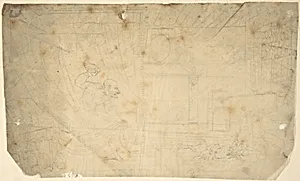
Medium
Graphite on tracing paper
Dimensions
Sheet: 4 1/2 × 7 5/8 in. (11.5 × 19.3 cm)
Classification
Drawings
Department
Drawings and Prints
Museum
Metropolitan Museum of Art, New York, NY
Credit
The Elisha Whittelsey Collection, The Elisha Whittelsey Fund, 1959
Accession Number
59.533.1723
Rights
Public Domain
Art Historical Context
Thomas Rowlandson’s *Dr. Syntax Loses Wig* (1820) captures a delightfully chaotic moment from the beloved satirical series *The Three Tours of Dr. Syntax*, by the artist for William Combe’s humorous verse. Published between 1812 and 1821, these works parodied the era’s sentimental travel literature, following the hapless, wig-wearing clergyman Dr. Syntax on absurd adventures in Regency England. This graphite drawing on tracing paper depicts the doctor in a whirlwind mishap—likely losing his signature wig amid comedic turmoil—highlighting Rowlandson’s sharp wit and flair for social satire. Rowlandson, a leading British caricaturist of the late 18th and early 19th centuries, mastered exaggerated figures and lively scenes in ink, watercolor, and now this intimate medium. Graphite on tracing paper allowed for quick, fluid sketches, often used as preparatory studies that could be transferred or refined. At just 4½ × 7⅝ inches, this delicate work exemplifies his economical linework, conveying motion and humor with minimal strokes, a technique that influenced later cartoonists. Housed in the Metropolitan Museum of Art’s Drawings and Prints department, this piece from The Elisha Whittelsey Collection offers a window into Georgian-era levity, poking fun at pretentious gentry while celebrating British eccentricity. Visitors will chuckle at Syntax’s misfortune, a timeless reminder of art’s power to humanize folly.
About the Artist
Thomas Rowlandson · 1756–1827
Thomas Rowlandson (1757–1827) was an English artist and caricaturist whose satirical watercolors and prints captured the social life of Georgian Britain with unparalleled wit and technical mastery. Alongside James Gillray, he is recognized as one of the greatest British graphic artists, and his distinctive flowing line and keen observations have made his work integral to understanding late 18th an...