
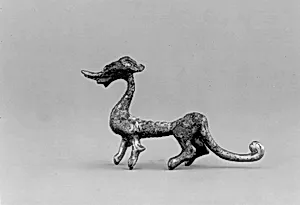
唐 鎏金青銅走龍|Dragon
Unknown Artist
7th century
Medium
Gilt bronze
Dimensions
H. 2 1/4 in. (5.7 cm); L. 4 in. (10.2 cm); Th. 7/8 in. (2.2 cm)
Classification
Sculpture
Culture & Period
China · Tang dynasty (618–907)
Department
Asian Art
Museum
Metropolitan Museum of Art, New York, NY
Credit
Gift of George D. Pratt, 1930
Accession Number
30.37.3
Rights
Public Domain
Tags
Art Historical Context
This exquisite gilt bronze "Walking Dragon" (走龍), crafted in 7th-century Tang dynasty China, captures the era's masterful blend of realism and dynamism. Standing just 2¼ inches tall and 4 inches long, small sculpture depicts a sinuous dragon in mid-stride, its body twisting with muscular energy and scales finely detailed. The unknown artist employed lost-wax casting—a sophisticated technique—to create the hollow bronze form, then applied a thin gold leaf gilding that still gleams today, evoking imperial luxury. In Tang China (618–907), a cosmopolitan golden age influenced by Buddhism and Central Asian trade, dragons symbolized imperial power, good fortune, and control over water and weather. Unlike later stylized depictions, Tang dragons often featured robust, lively forms like this one, reflecting the period's bold, naturalistic sculpture style seen in tomb figures and Buddhist art. This piece, likely a decorative ornament for a belt buckle, furniture, or ritual object, highlights the dynasty's technical prowess and cultural reverence for mythical beasts as protectors and omens of prosperity. Gifted to the Metropolitan Museum of Art in 1930 by George D. Pratt, this rare survivor offers a window into elite Tang artistry, where gilt bronze elevated everyday items to treasures. Visitors, imagine it adorning a noble's sash, whispering tales of ancient might!