
Drawing
Classification
textile designs
Department
Smithsonian Collection
Museum
Smithsonian American Art Museum
Credit
Museum purchase from Friends of the Museum Fund
Accession Number
1957-46-9
Rights
Public Domain
About this artwork
Research in Progress
Art Historical Context
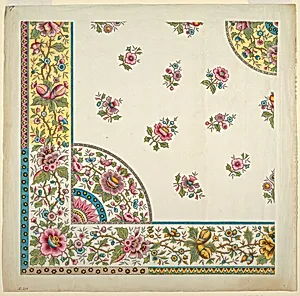
This delicate drawing by Swiss artist Louis-Albert Duois (1752–1818), created around 1801, offers a glimpse into the world of early 19th textile design. DuBois, active during a period of neoclassical refinement and burgeoning industrial innovation in Europe, specialized in patterns that bridged fine art and practical manufacturing. Housed in the Smithsonian American Art Museum's Smithsonian Collection, this work exemplifies how artists contributed to Switzerland's renowned textile trade, particularly in regions like Neuchâtel where intricate motifs adorned fabrics for export. Classified as a textile design, the drawing likely served as a blueprint for woven or printed textiles, showcasing the meticulous techniques of the era—precise lines, balanced compositions, and motifs inspired by nature or classical ornamentation. Though the medium remains unidentified amid ongoing research, such preparatory sketches were essential for translating artistic vision into scalable production, highlighting the fusion of creativity and commerce at the dawn of the Industrial Revolution. Acquired through the Museum purchase from Friends of the Museum Fund, this piece underscores the international influences shaping American collections. As research progresses, it invites visitors to appreciate the unsung role of designers like DuBois in everyday luxury, reminding us how a simple drawing could pattern the fabrics of history.