
Drawstring bag
Unknown Artist
1785
Medium
glass beads, silk
Classification
Drawstring bag
Culture
American
Department
Costume Institute
Museum
Metropolitan Museum of Art, New York, NY
Credit
Gift of Elizabeth F. Cooley, 1973
Accession Number
1973.189.1
Rights
Public Domain
Art Historical Context
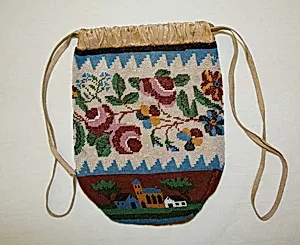
This exquisite drawstring bag, crafted in 1785, exemplifies early American fashion from the post-Revolutionary era. As reticules gained popularity among women in the late 18th century—replacing bulky pockets sewn into petticoats—these small, drawstring purses became essential accessories for carrying personal items like handkerchiefs, fans, or money. Produced in America during a time of burgeoning national identity, it reflects the blend of European influences and emerging local craftsmanship, showcasing how everyday objects embodied elegance and practicality. Made from shimmering glass beads meticulously applied to luxurious silk fabric, the bag highlights advanced beading techniques of the period. Glass beads, often imported or domestically produced, added a sparkling, jewel-like texture that mimicked more expensive embroidery, making high fashion accessible to the emerging middle class. The silk ground provided a soft, durable base, underscoring the era's appreciation for fine textiles amid growing transatlantic trade. Now housed in the Metropolitan Museum of Art's Costume Institute, this piece—generously gifted by Elizabeth F. Cooley in 1973—offers a tangible glimpse into 18th-century American women's lives, where personal adornment signaled status and sophistication. Visitors can appreciate its delicate artistry as a window into the refined tastes of a new nation.