
Dress border
Unknown Artist
early 19th century
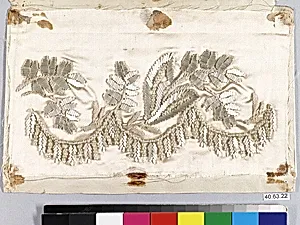
Medium
Silk
Dimensions
H. 4 1/2 x W. 8 1/4 inches 11.4 x 21 cm
Classification
Textiles-Embroidered
Culture
French
Department
European Sculpture and Decorative Arts
Museum
Metropolitan Museum of Art, New York, NY
Credit
Rogers Fund, 1940
Accession Number
40.63.22
Rights
Public Domain
Art Historical Context
Step into the refined world of early 19th-century French with this delicate *Dress Border*, a testament to the era's masterful textile craftsmanship. Crafted from luxurious silk and meticulously embroidered, this narrow trim measures just 4½ x 8¼ inches (11.4 x 21 cm), designed to adorn the hems, sleeves, or bodices of gowns. Acquired through the Rogers Fund in 1940 now housed in the Metropolitan Museum of's Department of European Sculpture and Decorative Arts, it exemplifies the intricate *Textiles-Embroidered* classification. During the Napoleonic Empire and early Restoration periods, such borders were essential accents for women's dresses, reflecting the opulence of French high society. Silk, prized for its sheen and durability, served as an ideal canvas for embroidery techniques that likely involved fine stitching with metallic or silk threads—methods honed by skilled artisans in Lyon or Paris workshops. These pieces highlighted France's dominance in luxury textiles, blending functionality with artistry. This anonymous creation offers a glimpse into everyday elegance, where even small details conveyed status and style. Its preservation underscores the cultural importance of embroidery as both a domestic art and a commercial export, inviting us to appreciate the unseen labor behind 19th-century glamour.