
Dress Ornaments
1500-1600
Medium
Decorative Arts-Jewelry
Classification
Decorative Arts-Jewelry
Department
Smithsonian Collection
Museum
Smithsonian American Art Museum
Credit
Smithsonian American Art Museum, Gift of John Gellatly
Accession Number
1929.8.235.65
Rights
Public Domain
Tags
Art Historical Context
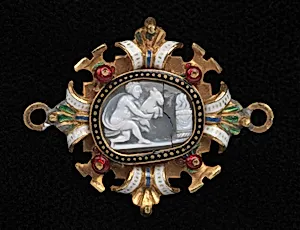
Step into the Renaissance world with *Dress Ornaments*, a captivating set of jewelry pieces from 1500-1600, created by an unidentified artisan. Crafted during a time when decorative arts flourished across Europe, these ornaments exemplify the era's exquisite metalwork and gem-setting techniques, often used to adorn clothing as brooches, pendants, or clasps. As part of the Smithsonian American Art Museum's collection—gifted by John Gellatly—they highlight the intersection of fashion and fine art, where personal adornment became a canvas for symbolism and status. Intriguing motifs like a donkey and nude figures suggest playful or allegorical themes common in Renaissance jewelry. Donkeys, symbols of humility or endurance in folklore, paired with nude forms evoking classical mythology or fertility, reflect the period's revival of ancient motifs amid emerging humanism. The medium's significance lies in its durability and intimacy—jewelry not only beautified but also told personal stories, blending craftsmanship with cultural narratives. Today, these ornaments invite us to ponder the wearer's world: a noble's feast or a lover's gift? Their mystery endures, making them a gem in the Smithsonian's Decorative Arts-Jewelry classification, perfect for sparking curiosity about 16th-century elegance.
About the Artist
Unidentified ( ) · –