
Dress panels (2)
Unknown Artist
third quarter 18th century
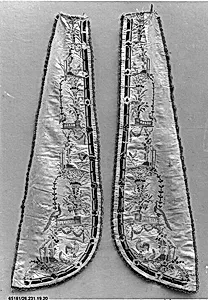
Medium
Silk on silk, metal lace
Dimensions
L. 43 x W. 12 3/4 inches (109.2 x 32.4 cm)
Classification
Textiles-Embroidered
Culture
French
Department
European Sculpture and Decorative Arts
Museum
Metropolitan Museum of Art, New York, NY
Credit
Rogers Fund, 1926
Accession Number
26.231.19, .20
Rights
Public Domain
Tags
Art Historical Context
These elegant dress panels, crafted in France during the third quarter of the 18th century, the lavish textiles that adorned the wardrobes of the French elite. Made from silk embroidered on silk with intricate metal lace, each panel measures 43 inches long by 12¾ inches wide, designed to form part of a grand robe or mantua. Acquired through the Rogers Fund in 6, they now grace the Metropolitan Museum of Art European Sculpture and Decorative collection, highlighting the era's mastery of embroidered textiles. The motifs—vibrant peacocks, strutting roosters, blooming flowers, and delicate boats—evoke the playful naturalism popular in Rococo fashion, blending whimsy with exotic flair. Metal lace added a shimmering, jewel-like texture, catching candlelight in opulent salons and gardens. Such panels were labor-intensive creations, often produced in specialized workshops, symbolizing wealth and status amid the Enlightenment's refined tastes. These fragments offer a glimpse into 18th-century French sartorial splendor, where clothing was both art and social statement, preserving the tactile luxury of a bygone age for modern admirers.