
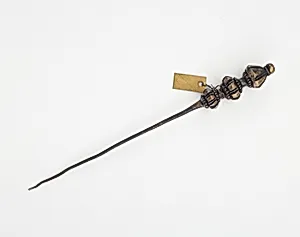
Dress Pin
600-500 B.C.
Medium
Decorative Arts-Jewelry
Classification
Decorative Arts-Jewelry
Department
Smithsonian Collection
Museum
Smithsonian American Art Museum
Credit
Smithsonian American Art Museum, Gift of John Gellatly
Accession Number
1929.8.187.2A
Rights
Public Domain
Art Historical Context
Step back in time over 2,500 years to behold this elegant Dress Pin, crafted around 600-500 B.C. by an unidentified artisan. Dating to the Archaic period, such pins—known as fibulae in ancient cultures—served both practical and ornamental purposes, fastening garments like cloaks or peplos while showcasing the wearer's status through intricate designs. This piece exemplifies early decorative arts in jewelry, metalworking techniques transformed everyday objects into symbols of sophistication. Jewelry from this era highlights the technological prowess of ancient smiths, who likely employed methods like casting, hammering, and perhaps gilding to create durable yet beautiful accessories. Worn by both men and women across Mediterranean and Near Eastern societies, these pins reflected cultural values of adornment and portability, often featuring motifs inspired by nature or mythology. Though details of its exact origin remain mysterious, its survival speaks to the enduring allure of personal ornamentation. Generously gifted to the Smithsonian American Art Museum by John Gellatly, this Dress Pin invites us to ponder the lives of its ancient owners—traders, warriors, or nobility—and the threads connecting past craftsmanship to modern appreciation. A subtle treasure in the Decorative Arts collection, it reminds us how small artifacts illuminate vast histories.
About the Artist
Unidentified ( ) · –