
Drie beroemde zichten
c. 1800 - c. 1805
Medium
nishikie, with metallic pigments and blindprinting
Dimensions
208; 139
Rights
Public Domain
About this artwork
Legaat van J.A. Bierens de Haan, Amsterdam
Art Historical Context
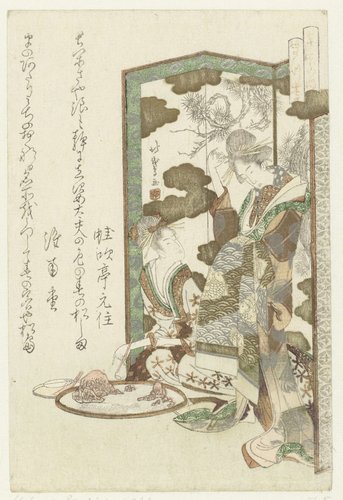
"Drie beroemde z" (Three Famous Views), created around 1800–1805 by Katsushika Hôtei Hokuga, captures the essence of Japan's ukiyo-e tradition—the "floating world" of ephemeral beauty. Hokuga, a disciple in the Katsushika school associated with the legendary Hokusai, specialized in intimate landscapes that celebrated renowned scenic vistas. This small woodblock print (208 × 139 mm) likely depicts three iconic Japanese views, evoking the poetic wanderlust of Edo-period travelers through vivid, stylized compositions. Printed as a *nishikie*—or "brocade picture"—it showcases the pinnacle of Japanese woodblock printing artistry. Luxurious metallic pigments, such as gold or silver mica, add a shimmering luminescence, while blindprinting (known as *gauffrage*) creates subtle embossed textures for depth and tactility. These advanced techniques, reserved for high-quality prints like *surimono* (custom commissions often with poetry), elevated everyday scenes to jewel-like treasures, blending technical innovation with aesthetic refinement. Bequeathed to a Dutch collection by J.A. Bierens de Haan, this work bridges Eastern artistry and Western appreciation, highlighting ukiyo-e's global allure during the 19th century. For visitors, it offers a window into Japan's golden age of printmaking, where nature's grandeur met masterful craftsmanship.