
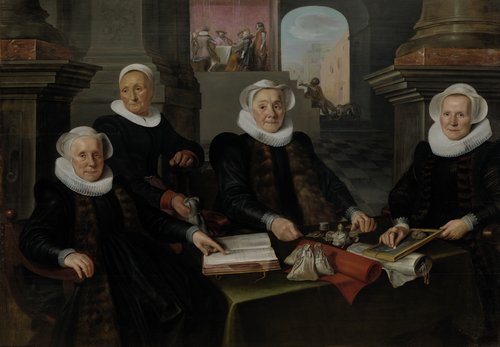
Drie regentessen en de binnenmoeder van het leprozenhuis te Amsterdam
Medium
oil on panel
Dimensions
132; 189.5; 31.2
Rights
Public Domain
About this artwork
On loan from the City of Amsterdam
Art Historical Context
In the heart of Amsterdam's Dutch Golden Age, Werner van den Valkert's *Drie regentessen en de binnenmoeder van het leprozenhuis te Amsterdam* (1624) captures a moment of civic virtue. This oil-on-panel group portrait depicts three female regentesses—wealthy women who governed the city's lepers' asylum—and the institution's housekeeper, seated in a sober interior. Painted at 132 x 189.5 cm, it exemplifies the era's tradition of commemorating charitable overseers, much like later works by Rembrandt. On loan from the City of Amsterdam to the Rijksmuseum, it underscores the municipality's enduring pride in its philanthropic past. Van den Valkert, a Haarlem-born artist active in Amsterdam, infused his portraits with dramatic realism influenced by Caravaggesque light and shadow, though here the emphasis is on dignified restraint. The women's direct gazes and richly textured black attire convey authority, piety, and social status, reflecting 17th-century Protestant values where managing almshouses for the leprosy-afflicted was both moral duty and public prestige. Lepers' homes like this one highlighted Amsterdam's prosperity and compassion amid urban growth. This artwork offers a glimpse into the lives of unsung heroines of welfare, blending portraiture's psychological depth with historical testimony to a tolerant, organized society. A testament to early group portrait mastery, it invites visitors to ponder how charity shaped the Golden Age's glittering facade.